
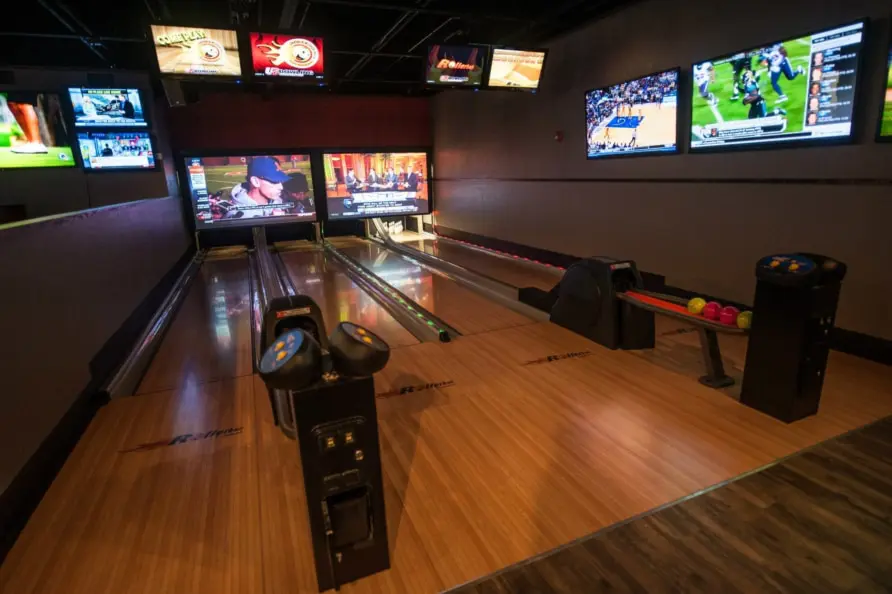
Short on space doesn’t mean short on opportunity.
Duckpin bowling makes it possible to add a full bowling experience in urban locations, historic buildings, and multi-use venues where ten-pin lanes simply won’t fit—turning limited space into high-impact revenue.
One of the biggest obstacles to adding bowling to a facility has always been space. Traditional ten-pin bowling requires a long building footprint, heavy machinery, and a large mechanical back-of-house area. For many operators, especially in urban environments or older buildings, this makes bowling impossible.
Duck pin bowling changes that entirely. It was built for modern spaces, tighter layouts, and mixed-use facilities. Its compact design allows operators to install bowling where ten-pin systems simply cannot go, unlocking revenue opportunities that were previously off the table.
For urban developers, hospitality groups, entertainment operators, and adaptive reuse projects, duckpin bowling isn’t just an alternative—it’s the solution.
The Space Problem with Traditional Ten-Pin Bowling
Ten-pin bowling lanes require a significant amount of depth, along with large pinsetters, heavy machinery pits, and extensive mechanical infrastructure. This creates several limitations:
- Buildings must be long and deep
- Ceiling height requirements are higher
- Structural reinforcement is often necessary
- Renovation costs increase dramatically
- Urban real estate becomes cost-prohibitive
For many properties, especially in city centers or historic districts, these requirements make ten-pin bowling unrealistic or impossible.
Duckpin Bowling: Designed for Compact Footprints
Duckpin bowling was engineered to solve the space problem. With shorter lanes, smaller pinsetters, and more efficient mechanical systems, duckpin installations require significantly less depth and overall square footage.
This allows:
- Bowling installations in narrow buildings
- Use of upper floors and non-traditional spaces
- Higher lane density in smaller footprints
- Integration into entertainment complexes
Where ten-pin bowling needs massive real estate, duckpin thrives in compact environments.
Perfect for Urban Locations
Urban real estate is expensive, limited, and often constrained by existing building designs. Duckpin bowling aligns perfectly with these challenges.
In cities, duckpin bowling:
- Maximizes revenue per square foot
- Fits into storefronts and mixed-use developments
- Works in high-rent districts
- Enhances nightlife and social venues
Bars, lounges, rooftop venues, and boutique entertainment centers benefit from duckpin’s ability to deliver a bowling experience without consuming excessive space.
Ideal for Historic Buildings
Historic properties often come with strict renovation guidelines and structural limitations. Heavy machinery, deep excavation, and major building modifications are usually restricted or impossible.
Duckpin bowling is uniquely suited for historic spaces because:
- Equipment weight is lower
- Structural impact is minimized
- Lane depth requirements are shorter
- Installations can be more easily adapted
This makes duck pin bowling one of the few bowling formats that can be added to preserved buildings while maintaining architectural integrity.
Built for Multi-Use Entertainment Centers
Modern entertainment venues rarely rely on just one attraction. They combine:
- Food and beverage
- Arcades and games
- Event spaces
- Social seating
- Immersive experiences
Duckpin bowling integrates effortlessly into these environments because it:
- Uses minimal floor space
- Offers fast game turnover
- Appeals to all age groups
- Encourages group play
Instead of dominating the building footprint, duckpin becomes a flexible revenue generator that supports the overall business model.
More Revenue in Less Space
One of duckpin bowling’s greatest strengths is its ability to generate strong revenue from a small area. With higher lane density and faster gameplay, operators can:
- Serve more guests per hour
- Increase booking availability
- Improve party and event throughput
- Boost food and beverage attachment rates
This results in higher revenue per square foot compared to traditional ten-pin bowling, making duck pin especially attractive in high-cost real estate markets.
Design Freedom and Creative Layouts
Because duckpin bowling systems are compact, designers gain far more flexibility:
- Curved or segmented layouts
- Lounge-style seating
- Open bar integration
- Multi-level designs
- High-end finishes
Duckpin bowling becomes part of the venue’s identity rather than a massive mechanical installation that dictates the entire layout.
Where Ten-Pin Can’t Go, Duckpin Can
There are countless locations where ten-pin bowling simply isn’t feasible:
- Narrow urban buildings
- Historic structures
- Upper floors
- Small footprint entertainment venues
- Hybrid hospitality concepts
Duckpin bowling opens the door to all of them.
Comparison: Space Requirements
| Feature | Duckpin Bowling | Ten-Pin Bowling |
|---|---|---|
| Lane Length | Shorter | Longer |
| Equipment Size | Compact | Large |
| Back-of-House Space | Minimal | Extensive |
| Building Modifications | Minimal | Major |
| Installation Flexibility | High | Low |
Duckpin Unlocks New Possibilities
Duckpin bowling is not just smaller than ten-pin—it is smarter for modern spaces. Its compact design allows bowling to exist in places where it was previously impossible.
For urban developments, historic renovations, and multi-use entertainment centers, duckpin bowling opens doors that ten-pin simply can’t. It transforms space limitations into business opportunities.
When space is your biggest challenge, duckpin bowling becomes your greatest advantage.